Mastering Black Silhouette Cats Vector Art for Professional Design Projects
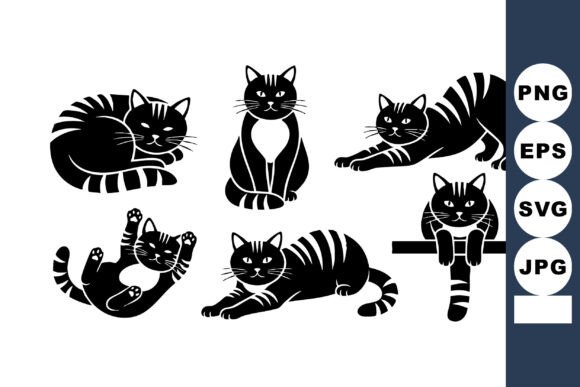
Visual storytelling relies heavily on clarity and impact, which is why Black Silhouette Cats Vector Art has become a staple in modern graphic design. These illustrations capture the essence of feline behavior—playful leaps, restful curls, and curious stances—using minimal lines and solid shapes. For designers, marketers, and hobbyists alike, these assets offer a versatile foundation for creative work. However, simply downloading a file does not guarantee a successful project. Many creators overlook critical technical and aesthetic details, leading to wasted time and subpar results. Understanding how to properly select, evaluate, and implement these vector resources is essential for maintaining professional quality.
The Misconception of "One Size Fits All" File Formats
A common error among beginners is assuming that all image files function identically across different platforms. You might download a collection expecting immediate usability, only to find the files incompatible with your software or unsuitable for your intended medium. The downloadable ZIP for this collection includes SVG, EPS, JPG, and PNG files, each serving a distinct purpose. Using a JPG for a large-scale print, for instance, will result in pixelation and blurry edges, destroying the clean aesthetic that defines silhouette art.
SVG (Scalable Vector Graphics) and EPS (Encapsulated PostScript) are vector formats. They use mathematical paths rather than pixels, allowing you to scale the image from the size of a business card to a billboard without losing quality. If you are designing logos, signage, or any asset that requires resizing, you must use these formats. Conversely, PNG and JPG are raster images. While they are excellent for web use, social media posts, or quick previews, they have fixed resolutions. Relying on raster files for print projects is a costly mistake that often requires re-purchasing assets or redesigning from scratch.
To avoid this, always check your final output requirements before selecting a file. If you are sending designs to a professional printer, EPS is typically the safest choice. For web developers embedding icons or illustrations into a site, SVG is superior due to its small file size and scalability. Keep the raster versions for mockups or digital-only content where scaling is not a factor.
Overlooking Path Complexity and Editability
Another frequent oversight involves the internal structure of the vector files. Not all vector art is created equal. Some silhouettes are constructed with excessive anchor points or unnecessary compound paths, making them difficult to edit. When you attempt to change the shape of a cat’s tail or adjust the curve of its back in software like Adobe Illustrator or Inkscape, a messy path can cause glitches or unexpected distortions.
High-quality Black Silhouette Cats Vector Art should feature clean, simple lines and shapes. This simplicity is not just an aesthetic choice; it is a functional one. Clean paths ensure that the file remains lightweight and easy to manipulate. Before committing to a design, open the SVG or EPS file and inspect the nodes. If you see hundreds of points where a smooth curve should be, the file may have been poorly optimized. This can slow down your workflow, especially if you are integrating multiple elements into a larger composition.
A better approach is to test the editability of the asset early in your process. Try adjusting a few anchor points or changing the color. If the software lags or the shape breaks, consider finding a more optimized resource. The charm of these cat illustrations lies in their lively yet simple forms, so the underlying data should reflect that efficiency.
Neglecting Contextual Harmony and Composition
Designers often focus so much on the individual asset that they forget to consider how it fits into the broader composition. A black silhouette is bold and high-contrast. Placing it against a busy, dark, or low-contrast background can render the subject invisible or visually confusing. This is particularly relevant when using these cats for decorative projects, such as wall decals, greeting cards, or website headers.
The effectiveness of a silhouette depends entirely on negative space. Ensure there is sufficient contrast between the black shape and its background. If you are working on a light-themed project, the black cat will pop naturally. However, for dark-mode interfaces or night-themed designs, you may need to invert the colors or add a subtle stroke or glow effect to define the edges. Failing to plan for this contrast can make your design look amateurish and hard to read.
Additionally, consider the pose relative to the layout. A cat in a playful, mid-air leap requires more vertical space than one in a resting pose. Ignoring the spatial requirements of each pose can lead to cramped layouts or awkward cropping. Always arrange your elements with ample breathing room, allowing the simple shapes to communicate their charming and lively nature without feeling constrained.
Ignoring Licensing and Commercial Use Rights
Perhaps the most critical mistake involves intellectual property. Many creators assume that because they downloaded a file, they own it completely. This is rarely the case. Most digital assets come with specific licensing terms that dictate how they can be used. Using a personal-use license for a client project or a commercial product can lead to legal issues and financial penalties.
Before using any vector cat illustrations in a product you intend to sell, such as t-shirts, mugs, or printed books, verify the license agreement. Look for terms like "Commercial Use Allowed" or "Royalty-Free." If the license is unclear, contact the creator or platform for clarification. Protecting your business and reputation means respecting the rights of the artists who create these resources. It is a small step that prevents significant headaches down the line.
Best Practices for Integration
To maximize the value of your Black Silhouette Cats Vector Art, follow these practical steps:
- Audit your files: Organize your downloaded ZIP contents immediately. Separate vectors from rasters to streamline your workflow.
- Test scalability: Scale your chosen vector up to 200% and down to 10% to ensure it remains crisp and recognizable at all sizes.
- Check contrast: Place the silhouette on your intended background early in the design phase to verify visibility.
- Simplify edits: If you need to modify the shape, use the pen tool to redraw complex sections rather than trying to untangle messy anchor points.
- Respect licensing: Keep a record of where you downloaded each asset and its associated license terms for future reference.
By avoiding these common pitfalls, you ensure that your projects remain professional, efficient, and visually compelling. The versatility of black silhouette cats offers endless creative possibilities, from whimsical children’s book illustrations to sleek modern branding. Treat these assets with the technical care they deserve, and they will elevate your design work significantly.
Ultimately, the goal is to let the charming and lively poses speak for themselves. Whether you are a freelancer creating a logo for a pet shop, a blogger adding visual interest to an article, or a hobbyist making homemade gifts, the right approach to vector art makes all the difference. Focus on clean execution, proper format selection, and thoughtful composition. With these principles in mind, you can transform simple shapes into impactful design elements that resonate with your audience.