Integrating Floral and Swirl Black Ornamental Corner Designs into Professional Design Workflows
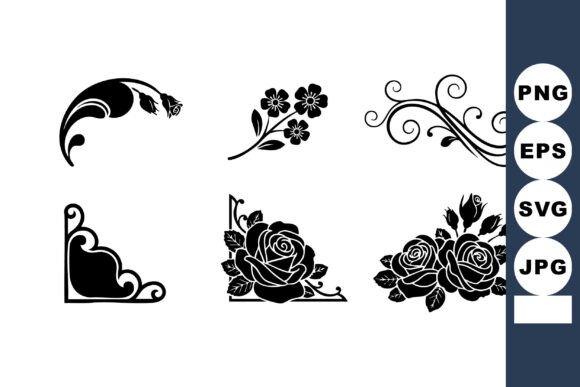
In the landscape of digital design, the distinction between a functional layout and a compelling visual experience often lies in the details. Decorative elements serve as the punctuation marks of graphic composition, guiding the eye and establishing tone without overwhelming the primary message. Among these assets, the Floral and Swirl Black Ornamental Corner collection stands out as a versatile resource for creators who value both aesthetic elegance and operational efficiency. This set, featuring six distinct black ornamental floral and swirl corner designs, is not merely a decorative add-on but a strategic tool for framing content, enhancing borders, and establishing a classic, sophisticated mood across various media.
For professionals ranging from freelance graphic designers to small business owners managing their own marketing materials, understanding how to integrate these vector assets into existing workflows is crucial. The utility of such elements extends beyond simple decoration; they provide structural balance and visual hierarchy. By incorporating these corners into your design process, you can streamline the creation of invitations, certificates, menu layouts, and branded documents, ensuring consistency and high-quality output with minimal effort.
The Strategic Role of Ornamental Corners in Visual Composition
Before diving into technical implementation, it is essential to understand where ornamental corners fit within the broader design process. In any project involving text-heavy layouts or framed imagery, the corners act as anchors. They define the boundaries of the content area, creating a subconscious frame that helps the viewer focus on the central information. The Floral and Swirl Black Ornamental Corner designs are particularly effective because their black colorway offers high contrast against light backgrounds, ensuring visibility and clarity.
These elements are best utilized during the refinement stage of a project. Once the primary layout, typography, and imagery are established, decorative corners can be added to reinforce the brand’s aesthetic or the document’s purpose. For instance, in wedding stationery or formal event invitations, these swirls convey a sense of tradition and elegance. In corporate settings, such as award certificates or formal reports, they add a layer of prestige and attention to detail. Recognizing this role allows designers to plan their asset usage more effectively, ensuring that the decorative elements complement rather than compete with the core content.
Workflow Integration: From Asset Acquisition to Final Export
Efficient workflow management is key to maintaining productivity in creative fields. The downloadable ZIP file containing the Floral and Swirl Black Ornamental Corner assets includes SVG, EPS, JPG, and PNG formats. This variety ensures compatibility with virtually any design software, from industry standards like Adobe Illustrator and Photoshop to accessible tools like Canva, Affinity Designer, or even word processors like Microsoft Word.
Preparation and Organization
The first step in integrating these assets is proper organization. Upon downloading the ZIP file, extract the contents into a dedicated folder within your project’s asset library. Labeling files clearly—for example, "Corner_TopLeft_SVG" or "Corner_BottomRight_PNG"—saves time during the selection process. For vector-based workflows, prioritize the SVG and EPS files. These formats are resolution-independent, meaning they can be scaled to any size without losing quality. This is particularly important for large-format prints such as banners or posters, where pixelation must be avoided.
If your workflow involves raster-based editing or quick social media graphics, the PNG files with transparent backgrounds are invaluable. They allow for immediate drag-and-drop placement without the need for additional masking or background removal. The JPG files serve as useful placeholders or references when working in environments that do not support transparency or vector formats.
Implementation in Vector Software
When using Adobe Illustrator or similar vector tools, import the EPS or SVG files directly into your document. One practical tip is to convert the corner elements into symbols or components. This allows you to place all four corners of a frame quickly and ensures that any adjustments made to one instance can be applied globally if needed. Align the corners precisely with the edges of your artboard or text box using smart guides to maintain symmetry. The classic swirl design of these corners pairs well with serif typography, so consider adjusting the tracking and leading of your text to harmonize with the intricate details of the floral elements.
Implementation in Raster and Web-Based Tools
For users working in Photoshop or web-based platforms, the PNG files offer the most seamless integration. Place the corner images on separate layers above your background but below your main text or focal imagery. This layering strategy ensures that the decorative elements frame the content without obscuring it. If the black color of the corners needs to match a specific brand palette, use adjustment layers or hue/saturation tools to modify the color while preserving the intricate details of the swirls. However, keeping them black often maintains the highest level of elegance and readability, especially on white or pastel backgrounds.
Ensuring Consistency and Quality Control
Consistency is a hallmark of professional design. When using the Floral and Swirl Black Ornamental Corner set across multiple projects or within a single multi-page document, ensure that the scale and positioning of the corners remain uniform. Create a template file with the corners pre-positioned and locked. This template can then be reused for various projects, reducing setup time and minimizing the risk of misalignment.
Quality control also involves checking the visual balance. Because these designs are ornate, they can appear heavy if placed too close to dense text blocks. Leave adequate whitespace between the inner edge of the corners and the start of your content. This breathing room enhances readability and allows the decorative elements to stand out as deliberate design choices rather than clutter. Additionally, verify the output resolution before finalizing any print job. While vector files scale infinitely, raster exports must be set to at least 300 DPI for print quality to ensure the fine lines of the swirls remain crisp.
Practical Use Cases and Industry Applications
The versatility of these black ornamental corners makes them suitable for a wide range of industries and applications. Here are several practical scenarios where these assets can enhance the final product:
- Event Stationery: Wedding invitations, save-the-dates, and menu cards benefit from the classic and elegant mood provided by the floral swirls. They add a touch of sophistication that aligns with formal events.
- Certificates and Awards: Academic institutions and corporate organizations can use these corners to frame diplomas, certificates of achievement, and employee awards, lending an air of authority and tradition.
- Restaurant Menus: Fine dining establishments often use bordered layouts to guide customers through the menu options. The black corners provide a clear visual boundary that enhances the perceived value of the dining experience.
- Book Covers and Publishing: Authors and publishers can incorporate these elements into chapter headers, title pages, or book covers to evoke a sense of classic literature or historical narrative.
- Marketing Materials: Flyers, brochures, and promotional posters can use these corners to highlight special offers or key messages, drawing the viewer’s eye to the center of the design.
Maximizing Long-Term Value
To get the most out of the Floral and Swirl Black Ornamental Corner collection, consider building a personal library of modified versions. Save variations with different colors, opacities, or combined arrangements. This proactive approach reduces future workload and allows for rapid prototyping when new projects arise. Furthermore, staying updated with design trends helps in knowing when to deploy such classic elements. While minimalism remains popular, there is a enduring demand for maximalist and vintage-inspired designs where ornate details are celebrated.
In conclusion, the integration of decorative assets like the Floral and Swirl Black Ornamental Corner into your design workflow is a practical step toward achieving higher quality and greater efficiency. By understanding their strategic role, organizing assets effectively, and applying consistent quality control measures, creators can elevate their projects with ease. Whether you are designing a single invitation or a comprehensive brand suite, these vector tools provide the flexibility and elegance needed to make a lasting impression.