Hand Drawn Seafood Assortment: Integrating Organic Illustrations into Modern Design Workflows
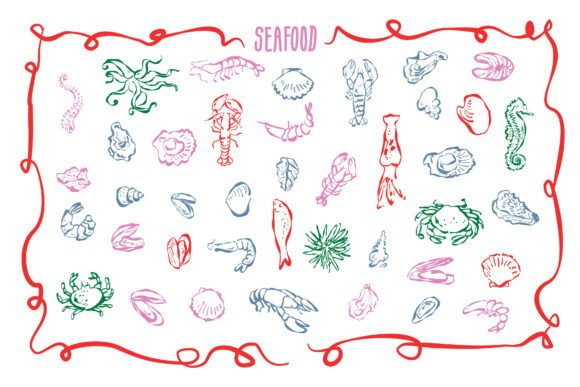
In the contemporary landscape of digital and print design, the demand for assets that balance professionalism with approachability is higher than ever. The Hand Drawn Seafood Assortment represents a specific category of graphic resources designed to bridge this gap. Unlike sterile, vector-perfect clip art, hand-drawn illustrations carry a texture and warmth that resonates with audiences seeking authenticity. For designers, marketers, and educators, integrating these assets is not merely about decoration; it is a strategic decision that influences brand perception, user engagement, and educational clarity.
This article explores how to effectively incorporate the Hand Drawn Seafood Assortment and the accompanying Hand Drawn Seafood Assortment with Red Decorative Frame Set into your creative processes. By understanding the technical advantages of SVG formats and the aesthetic implications of hand-drawn styles, you can streamline your workflow and produce higher-quality outcomes across various mediums.
Understanding the Asset: Format and Flexibility
The foundation of any efficient design workflow is the quality and compatibility of the source files. The Hand Drawn Seafood Assortment is delivered in SVG (Scalable Vector Graphics) format. This choice is critical for modern implementation. Unlike raster images (such as JPEG or PNG), SVGs are mathematically defined paths. This means they can be scaled infinitely without losing resolution or becoming pixelated.
For professionals working across multiple platforms, this scalability is a significant time-saver. You can use the same asset for a small social media icon, a large-format restaurant menu board, or a high-resolution printed brochure without needing to create multiple file versions. Furthermore, SVGs are typically lightweight, which improves page load speeds for digital projects—a key factor in SEO and user experience.
The "hand-drawn" aspect refers to the stylistic execution. These graphics mimic the imperfections and organic lines of manual illustration. This style humanizes digital content, making it feel less corporate and more inviting. When paired with the Red Decorative Frame Set, the assortment offers a complete visual system. The frames provide structure, allowing you to highlight specific seafood items or text, creating a cohesive look that guides the viewer’s eye.
Strategic Implementation in Commercial Projects
For entrepreneurs and small business owners, particularly in the food and hospitality sectors, visual consistency is paramount. The Hand Drawn Seafood Assortment fits seamlessly into branding workflows for seafood restaurants, fish markets, and culinary blogs. Here is how you can integrate these assets into your commercial strategy:
- Menu Design: Use the individual seafood illustrations to break up text-heavy menus. Placing a hand-drawn crab or lobster next to a signature dish creates a visual anchor, helping customers navigate options more easily. The red decorative frames can be used to highlight specials or chef recommendations, drawing immediate attention to high-margin items.
- Packaging and Labels: If you sell seafood products, sauces, or related goods, these graphics add an artisanal touch to packaging. The clean lines ensure legibility even at smaller sizes, while the vibrant colors maintain shelf appeal. Ensure you check print specifications for color profiles (CMYK vs. RGB) before final production.
- Social Media Content: Marketers can use these assets to create consistent template backgrounds for Instagram or Facebook posts. The friendly style aligns well with lifestyle content, recipe shares, and behind-the-scenes looks at kitchen operations. Because the files are editable, you can change colors to match seasonal campaigns or brand updates quickly.
The key to success here is consistency. Do not mix these hand-drawn elements with overly photorealistic images unless intentionally aiming for contrast. Instead, pair them with complementary typography and a limited color palette to maintain a professional, curated appearance.
Educational and Informational Applications
Educators and content creators often struggle to find resources that are both accurate and engaging. The Hand Drawn Seafood Assortment serves as an excellent tool for educational materials, from elementary school biology lessons to adult nutrition guides. The clear, distinct lines make it easy for learners to identify different species and cuts of fish.
When developing lesson plans or informational blog posts, consider the following workflow:
- Preparation: Identify the specific learning objectives. Are you teaching about marine ecosystems, nutritional benefits, or culinary preparation? Select the relevant illustrations from the assortment that align with these goals.
- Integration: Use the SVG files in your presentation software or document editor. Because they are vectors, you can isolate specific parts of an illustration if needed, or group them to show relationships (e.g., a school of fish).
- Contextualization: Combine the illustrations with concise text. The red decorative frames can be used to create "fact boxes" or callouts that summarize key information, improving readability and retention.
This approach transforms abstract concepts into tangible visuals. For bloggers writing about sustainable fishing or healthy eating, these graphics break up long paragraphs, reducing bounce rates and keeping readers engaged. The visual appeal encourages sharing, which can organically boost your content’s reach.
Technical Workflow and Best Practices
To maximize the utility of the Hand Drawn Seafood Assortment, it is essential to adopt a structured technical workflow. Whether you are using Adobe Illustrator, Inkscape, Canva, or other design tools, the following practices will ensure efficiency and quality control.
File Organization and Management
Before beginning any project, organize your assets. Create a dedicated folder for the seafood assortment and the frame set. Rename files descriptively if necessary (e.g., "crab_front_view.svg" instead of "asset_01.svg"). This saves time during the selection process, especially when working under tight deadlines. If your design software supports libraries, import the SVGs into a shared library for easy access across multiple projects.
Editing and Customization
One of the primary advantages of SVG is editability. You can adjust stroke weights, change fill colors, and modify shapes to better suit your specific needs. However, exercise caution to preserve the integrity of the hand-drawn style. Avoid over-editing, which can result in a loss of the organic feel. If you need to change colors, use a harmonious palette that complements the original vibrant tones. The red frames, in particular, should be used strategically to avoid visual clutter.
Compatibility Checks
While SVG is widely supported, some older platforms or email clients may not render them correctly. Always test your final designs across different devices and browsers. For print projects, convert SVGs to high-resolution PDFs or EPS files to ensure compatibility with professional printing presses. Verify that all text is outlined and colors are converted to CMYK if required by your printer.
Long-Term Value and Versatility
Investing in high-quality, versatile graphic assets like the Hand Drawn Seafood Assortment offers long-term value. Unlike trend-specific designs that may become obsolete quickly, hand-drawn illustrations have a timeless quality. They can be reused across various campaigns and projects, providing a consistent visual identity for your brand or educational materials.
Moreover, the versatility of the set allows for adaptation to different themes. While primarily seafood-focused, the artistic style can be applied to broader coastal or nautical themes. The red decorative frames can be repurposed for non-seafood content, offering additional utility. This adaptability reduces the need to constantly purchase new assets, streamlining your budget and resource management.
In conclusion, the Hand Drawn Seafood Assortment is more than a collection of images; it is a functional tool for enhancing communication. By understanding its technical properties and strategic applications, you can integrate it smoothly into your workflow. Whether you are designing a menu, creating educational content, or building a brand identity, these assets provide the clarity, warmth, and professionalism needed to connect with your audience. Focus on preparation, consistency, and thoughtful implementation to achieve the best results.