Tulip Floral Border Pattern: Elevating Your Design Projects with Precision and Elegance
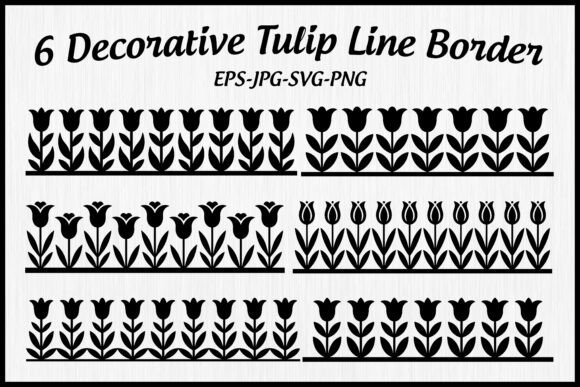
Integrating floral elements into digital and physical design projects requires more than just selecting a pretty image; it demands an understanding of scalability, resolution, and application context. The Tulip Floral Border Pattern offers a sophisticated solution for creators seeking to add a touch of elegance without compromising on technical quality. This specific collection features three beautifully arranged rows of tulip silhouettes, crafted in a bold black vector style against a light wooden textured background. While the aesthetic appeal is immediate, the true value lies in its versatility for laser cutting, digital decoration, invitations, stencils, and wall art.
However, many designers, hobbyists, and small business owners overlook critical technical details when sourcing and utilizing such assets. Misunderstanding file formats or ignoring the nuances of vector versus raster graphics can lead to frustrating outcomes, from pixelated prints to incompatible cuts on machines like Cricut or Glowforge. By addressing these common pitfalls, you can ensure that your use of this tulip floral border set enhances your workflow rather than hindering it.
Understanding the Versatility of Vector Borders
The core strength of this Tulip Floral Border Pattern lies in its vector foundation. Unlike standard JPEGs or PNGs, which are made of pixels, vector graphics like SVG and EPS files use mathematical paths to define shapes. This means you can scale the tulip silhouettes from the size of a business card to a large wall mural without losing any detail or sharpness. For entrepreneurs creating branded materials or educators designing classroom decor, this scalability is invaluable.
Yet, a frequent mistake is treating all digital files as interchangeable. A user might download the high-resolution JPG included in the pack and attempt to enlarge it significantly for a banner. The result is often a blurry, unprofessional image that fails to convey the intended elegance. To avoid this, always prioritize the SVG or EPS files for any project requiring resizing. Reserve the JPG and PNG formats for web use or fixed-size digital applications where scaling is not required.
Common Mistakes in File Selection and Usage
When working with multi-format packs like this 6 Tulip Floral Border Vector Set, selecting the wrong file type for your specific tool is a prevalent error. Here are some typical misunderstandings and how they impact your final product:
- Ignoring Transparent Backgrounds: Many beginners use the JPG version for overlaying designs on colored backgrounds. Since JPGs do not support transparency, you end up with an unwanted white box around your tulips. The correct approach is to use the PNG file, which offers a transparent background, allowing the floral border to blend seamlessly with your underlying design.
- Misconfiguring Laser Cutter Settings: When using these borders for laser cutting with machines like Glowforge or Silhouette, users often forget to simplify the vector paths. Complex vectors can cause the machine to pause frequently or cut inaccurately. Before sending the EPS or SVG file to your cutter, inspect the nodes and remove any unnecessary anchor points to ensure smooth, efficient operation.
- Overlooking Color Separation for Vinyl: For vinyl printing, the bold black vector style is ideal, but only if properly separated. A common oversight is sending a multi-layered file without flattening or separating colors according to the vinyl rolls available. This leads to wasted material and misaligned layers. Always check your design software’s layer panel before cutting.
Optimizing for Specific Platforms and Tools
Different crafting and design platforms have unique requirements. Understanding these nuances ensures that the Tulip Floral Border Pattern performs optimally across various mediums.
For Cricut and Silhouette Users
If you are using cutting machines, the SVG format is your best friend. It retains the cut lines and layer information necessary for precise execution. A practical tip is to upload the SVG directly into your design software (such as Cricut Design Space or Silhouette Studio) rather than converting it from another format. Conversion can sometimes introduce errors in the path data, leading to jagged edges or broken lines. Additionally, ensure that the "weld" or "union" function is applied if you want the tulip stems and flowers to cut as a single continuous piece, reducing weeding time.
For Digital Invitations and Web Graphics
When creating digital invitations or social media graphics, the PNG with a transparent background is essential. It allows you to place the tulip border over photos, pastel backgrounds, or textured papers without visual clutter. However, be mindful of file size. High-resolution PNGs can be large, slowing down website load times. If using the border on a website, consider compressing the PNG or using the SVG code directly if your platform supports it, as SVGs are lightweight and render crisply on all screen sizes.
For Large Format Printing and Wall Art
For home decor projects like wall art or large banners, the EPS file is the professional standard. It is compatible with industry-standard software like Adobe Illustrator and CorelDRAW. Using EPS ensures that the bold black silhouettes remain crisp even at massive scales. A common error here is printing from a preview window instead of exporting a high-quality PDF from the EPS file. Always export to PDF with high-resolution print settings to maintain the integrity of the vector lines.
Evaluating Quality and Detail Before Purchase
Before integrating any design asset into your workflow, it is crucial to evaluate its structural quality. With this tulip floral border pack, pay attention to the balance and precision of each silhouette. Poorly designed vectors may have overlapping paths or open ends, which can cause issues in cutting and printing. The included designs offer precise detail, but it is still wise to zoom in at 400% in your vector editor to check for any anomalies.
Another aspect to consider is the adaptability of the design. Can the rows be easily separated? Are the individual tulips grouped logically? Good vector organization saves time. If the elements are grouped intuitively, you can quickly duplicate, rotate, or modify individual flowers to create custom arrangements. This flexibility is key for marketers and bloggers who need unique visuals for different campaigns without starting from scratch.
Practical Advice for Seamless Integration
To maximize the utility of this Tulip Floral Border Pattern, follow these best practices:
- Organize Your Assets: Create a dedicated folder for your vector resources. Store the EPS, SVG, JPG, and PNG files together with a readme note about their specific uses. This prevents last-minute searches and format confusion.
- Test Cut Small Sections: Before committing to a full-scale laser cut or vinyl project, perform a test cut on a small section of the border. This helps you verify that the line weight and spacing are appropriate for your material thickness and machine capabilities.
- Layer Wisely: When combining the tulip border with other design elements, use layering to create depth. Place the black silhouettes over soft, complementary colors to enhance contrast. Avoid placing them over busy patterns that might obscure the delicate details of the tulip shapes.
- Respect Licensing Terms: Always review the license agreement associated with the download. Understanding whether the asset is for personal or commercial use protects you from legal issues and ensures ethical usage of the creator’s work.
In conclusion, the Tulip Floral Border Vector Set is a powerful tool for adding natural charm and sophistication to your projects. By avoiding common technical mistakes and leveraging the correct file formats for your specific needs, you can achieve professional-quality results efficiently. Whether you are crafting intricate laser-cut decor, designing elegant invitations, or enhancing digital content, this border pattern provides the precision and versatility required for modern creative workflows. Embrace the balance of aesthetic beauty and technical functionality to elevate your design endeavors.