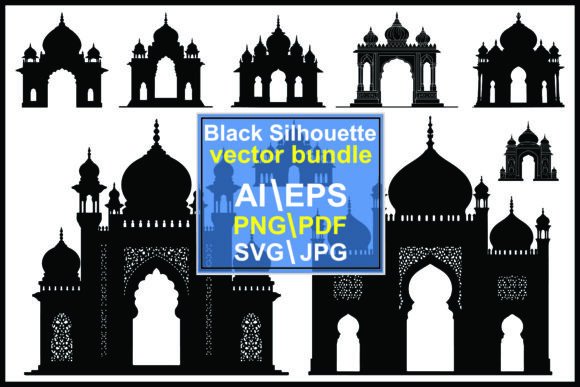
Exploring the Artistic Depth of Silhouettes of Islamic Architecture Arch Designs
The visual language of architecture is universal, yet few styles possess the immediate recognizability and profound aesthetic impact of Islamic design. At the heart of this architectural tradition lies the arch—a structural element that transcends mere engineering to become a symbol of cultural heritage, spiritual aspiration, and artistic mastery. For designers, historians, and creators, the Silhouettes of Islamic Architecture Arch represents more than just a shape; it is a gateway into a rich tapestry of history and ornamentation. Understanding the nuances of these forms allows for a deeper appreciation of their role in both historical contexts and modern graphic applications.
The Structural and Symbolic Power of the Arch
In Islamic architecture, the arch is not merely a support mechanism for domes and roofs; it is a defining feature that dictates the rhythm and flow of a building’s facade. From the horseshoe arches of the Great Mosque of Cordoba to the pointed arches of Persian mosques and the intricate muqarnas of Ottoman structures, each variation tells a story of regional influence and technological advancement. When reduced to a silhouette, these complex structures lose their material texture but gain a powerful graphic presence. The stark contrast of black against white highlights the geometric precision and ornamental complexity that define these landmarks.
The silhouette format strips away the distraction of color and light, forcing the viewer to focus on the pure form. This abstraction is particularly effective in highlighting the distinctive curves of the ogee arch, the stability of the rounded arch, and the verticality of the pointed arch. For professionals in graphic design and urban planning, studying these silhouettes offers insight into the proportional harmony that has made Islamic architecture enduringly popular across centuries and continents.
Versatility in Modern Design Applications
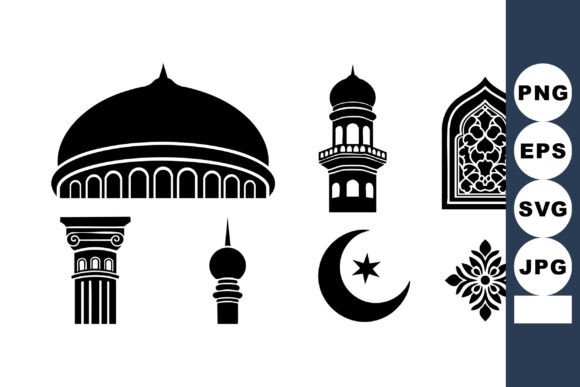
The utility of a Collection of Black silhouettes of Islamic architecture arches extends far beyond academic study. In the contemporary creative landscape, these vector assets serve as foundational elements for a wide array of projects. Because they are rendered in high-contrast black and white, they integrate seamlessly into diverse design systems without clashing with existing color palettes. This makes them invaluable for branding agencies looking to evoke a sense of tradition, elegance, or exoticism in their client’s visual identity.
- Travel and Tourism Marketing: Agencies promoting destinations in the Middle East, North Africa, or South Asia often use these silhouettes to create instant geographical context. A brochure featuring a mosque silhouette or an ornate gateway immediately signals the cultural experience awaiting the traveler.
- Educational Materials: Textbooks and online courses covering world history or religious studies benefit from clear, scalable graphics that illustrate architectural evolution without the copyright complications of photographic imagery.
- Packaging and Product Design: Brands selling spices, teas, or textiles inspired by Oriental traditions use these decorative elements to enhance shelf appeal. The intricate patterns found in the archways provide a sophisticated backdrop for product labeling.
- Digital Web Design: As websites seek unique header images and section dividers, SVG files of Islamic arches offer lightweight, resolution-independent options that load quickly and look crisp on any device.
Technical Advantages of Vector Formats
For creators who require flexibility and precision, the format of the digital asset is as crucial as the design itself. A comprehensive silhouette vector bundle typically includes multiple file types to accommodate different software ecosystems and output requirements. Understanding how to leverage these formats ensures that the Islamic architecture, mosque silhouette, archway, dome, minaret graphics can be used effectively across print and digital media.
The inclusion of AI (Adobe Illustrator) and EPS (Encapsulated PostScript) files is essential for professional designers. These vector formats allow for infinite scalability without loss of quality. Whether the design needs to be enlarged for a billboard or shrunk for a business card, the lines remain sharp and clean. Furthermore, vector files enable easy editing. Designers can modify the thickness of lines, adjust curves, or combine elements to create custom compositions that fit specific layout constraints.
For web developers and UI designers, SVG (Scalable Vector Graphics) files are indispensable. SVGs are code-based, meaning they can be manipulated via CSS for interactive effects, such as changing colors on hover or animating the drawing of the arch. This level of interactivity adds a dynamic layer to static designs, enhancing user engagement on digital platforms.
Meanwhile, PNG files with transparent backgrounds offer a quick solution for non-designers or those using software that does not support vector editing. These raster images are ready to drag and drop into presentations, social media posts, or document layouts. The availability of JPG files ensures compatibility with virtually every image viewer and editor, while PDF files provide a standardized format for printing and sharing proofs with clients.
Cultural Sensitivity and Historical Accuracy
When utilizing images of religious buildings and cultural heritage sites, it is imperative to approach the subject with respect and accuracy. Islamic architecture is deeply rooted in religious and cultural practices, and its representations should honor that significance. Using generic or inaccurate depictions can lead to misrepresentation. High-quality silhouette collections often strive for anatomical correctness in their architectural details, ensuring that the minarets, domes, and arches reflect authentic styles rather than stereotypical caricatures.
Creators should be mindful of the context in which these images are used. While the aesthetic beauty of Islamic art is universally appreciated, associating these symbols with inappropriate or offensive content can be detrimental. Educators and researchers, in particular, play a vital role in contextualizing these images, explaining the historical significance of structures like the Alhambra, the Taj Mahal, or the Blue Mosque. By treating these silhouettes as educational tools rather than mere decorative clips, users contribute to a broader understanding and appreciation of Middle Eastern, Arabian, and Indian architecture.
Workflow Integration for Creative Professionals
Integrating a diverse set of architectural silhouettes into a professional workflow requires organized file management. A typical bundle containing five types of formats compressed into a single zip file offers convenience but requires proper extraction. Users should employ reliable software such as WinZip, WinRAR, or the built-in extraction tools found in most operating systems. Simply double-clicking the zip file often allows for previewing contents, but extracting all files to a dedicated project folder ensures that links between design software and assets remain stable.
Once extracted, organizing files by format or project type can save significant time. For instance, keeping all SVGs in a web assets folder and all AI files in a print design folder prevents confusion during the production phase. Because these designs are versatile and can be used for any purpose, from commercial advertising to personal hobby projects, having a well-organized library allows creators to quickly access the right resource when inspiration strikes.
The Enduring Appeal of Ornamental Design
The fascination with Islamic architectural silhouettes stems from their inherent balance of complexity and simplicity. The ornate details of a lattice screen or the graceful curve of an entranceway capture the eye, while the solid black fill provides a grounding visual weight. This duality makes them perfect for pattern creation and design element repetition. Designers often use these silhouettes to create borders, backgrounds, or framing devices that add a touch of sophistication to otherwise plain layouts.
Moreover, the trend towards minimalism in modern design has renewed interest in high-contrast graphic elements. The black and white nature of these silhouettes aligns perfectly with minimalist aesthetics, allowing for clean, uncluttered compositions that still convey rich cultural narratives. Whether used as a standalone landmark illustration or as part of a larger collage of traditional building facades, these images offer a timeless quality that resists fleeting design trends.
In conclusion, the Silhouettes of Islamic Architecture Arch collection is more than a set of digital files; it is a resource for storytelling, education, and artistic expression. By understanding the historical context, technical capabilities, and ethical considerations associated with these images, creators can harness their full potential. From the grandeur of a monument to the delicacy of an architectural detail, these silhouettes invite us to explore the beauty of Islamic art through the lens of modern design.